
Categories
Energy & Environment Technology Transportation & Logistics U.K

Conidia Bioscience Announces New Packaging and Options for FUELSTAT® Microbial Contamination Testing Kits

Egham, Surrey (UK), 20th Jan — Conidia Bioscience, the manufacturer of the FUELSTAT® testing solution for microbial detection in fuel, has recently announced new packaging and quantity options for the testing kits. 

Packaged in sealed foil pouches, FUELSTAT® is now delivered as a single-boxed test kit or in boxes of eight. 

The latest point-of-sale packaging of the testing kit includes essential details about the product and its accompanying apps, says Conidia Bioscience.

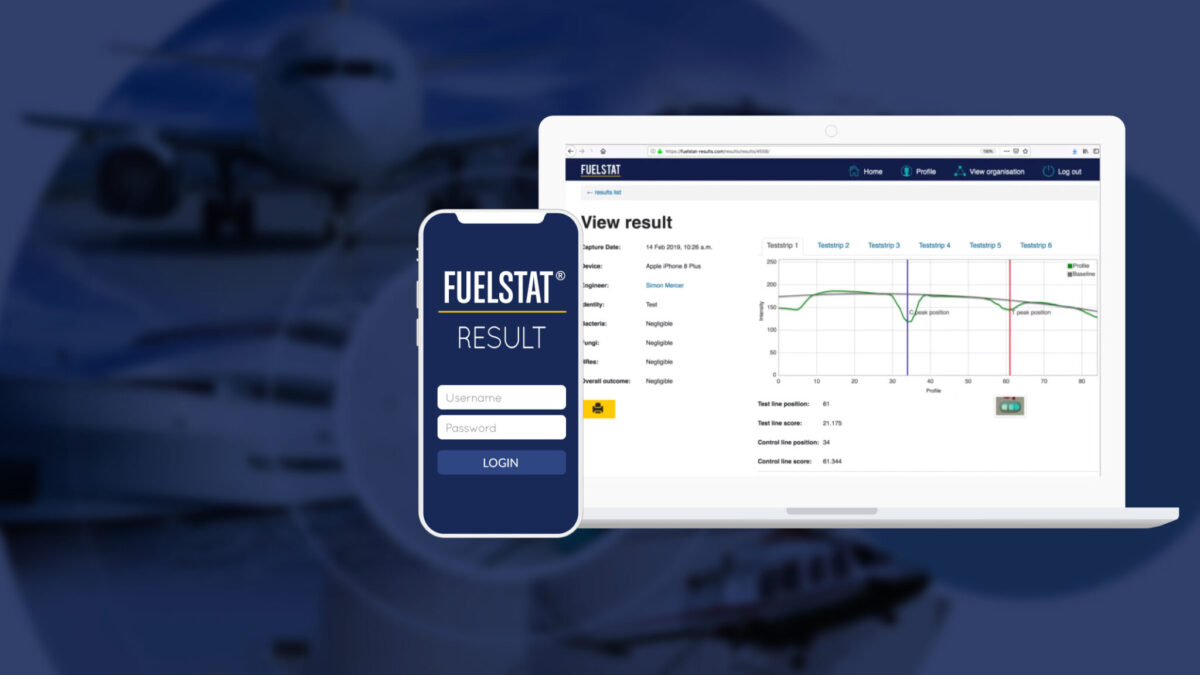
In a move to make microbial contamination detection with FUELSTAT® even more reliable and accurate, Conidia offers a free app available on both iOS and Android. 

While the FUELSTAT® Report enables global traceability of fuel testing, the FUELSTAT® Result helps record and verify test results instantly, thus limiting the need for human interpretation.

To attain Net Zero targets faster for a more sustainable future, the move to transition to biofuels is now getting a push. 

Even though biofuels are more eco-friendly, the reduction in sulphur and the introduction of fatty acid methyl ester (or FAME) spurs microbial growth in fuel which leads to serious repercussions. Frequent fuel filter clogging, operational disruption in generators or aircraft, inaccurate fuel quantity readings, Microbially Influenced Corrosion (MIC) of the fuel tanks, and engine failure are a few of the growing list of problems caused by diesel bugs. 

For commercial businesses running on these fuels, the consequences of microbial contamination can be even more catastrophic. 

Processes such as fuel polishing or tank cleaning are expensive and put the asset out of operation for a long time.

With the increasing bio-content exacerbating microbial contamination in middle distillate fuels (jet and diesel fuel), limiting its impacts has become a major concern. 

Conidia Bioscience stresses the importance of using a high-end fuel testing kit specially designed for microbial contamination to detect microbial growth at the earliest possible phase. 

“Treating contamination and the issues in the early stages is faster, cheaper, and less risky than it would be in later stages,” explains a spokesperson from Conidia Bioscience. “Depending on the type of test, it may identify the type and quantity of microbes. There is always some presence of microbes in fuel, but tests will indicate if it is a negligible, moderate, or heavy amount.”

Built on state-of-the-art immunoassay antibody technology, FUELSTAT® by Conidia Bioscience only identifies microorganisms damaging to fuel. 

The result is a reduced possibility of misleading outputs, which yields a higher degree of accuracy. 

Unlike traditional growth-based tests that require at least 72 hours, FUELSTAT® takes only 15 minutes to detect harmful microbial growth in the fuel. 

Conidia marks FUELSTAT® as the only microbial detection test kit that can be used on-site—requiring no additional equipment or stringent sterility controls. 

Interested parties can find out more about Conidia Bioscience by visiting https://conidia.com.
Categories
Books & Literature Leisure Activities Lifestyle Transportation & Logistics Travel

What Airline Passengers Don’t Know About What Happens Behind the Scenes with Air Traffic Control and Most Experts Won’t Reveal

TheWashington, D.C. – Each day, an estimated 2,900,000 passengers fly in and out of U.S. airports and most have no idea what goes on behind-the-scenes. They don’t know what is involved to get them safely to their final destination or what decisions are made by air traffic controllers to safely navigate their flight. While most days are usually uneventful, situations occur that can be the difference between life and death, and that’s where people like Andy Watson come in.  

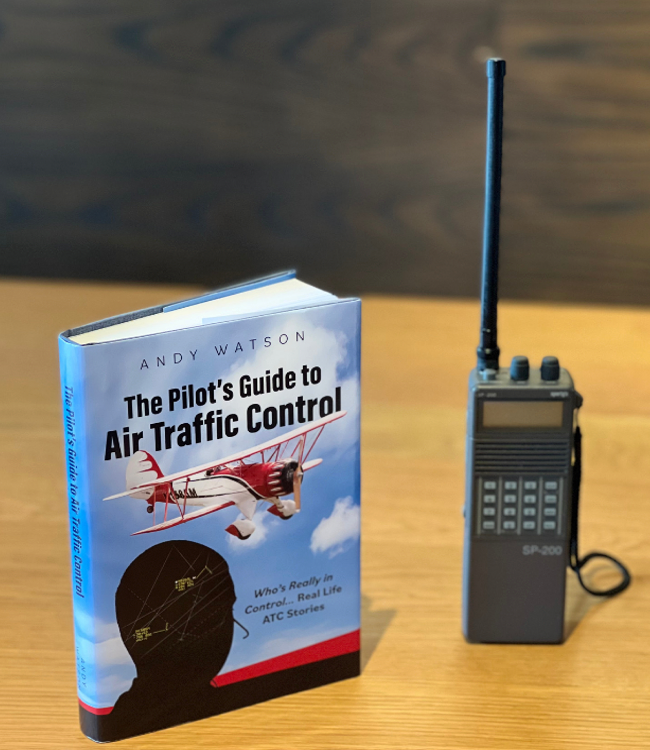
No ordinary pilot, Watson has been flying airplanes since he was eight years old, and has also worked as an Air Traffic Control (ATC) Specialist at many of the busiest facilities throughout the eastern United States for more than 14 years. In fact, he is one of only a select few pilots who has a multi-faceted understanding of aviation, which most pilots never realize. Watson’s experiences both as a pilot in the aircraft and professionally tracking planes on the air traffic control radar scope inspired him to write The Pilot’s Guide to Air Traffic Control, a collection of behind-the-scenes stories that places the reader right in the middle of real-life situations that bring the stress and urgency air traffic controllers deal with on a daily basis to bear.*  

Watson has written more than thirty chapters about his experiences as an air traffic controller with pilots in mind that includes an exclusive peek into an intense world which travelers rarely see, and dispels several myths about the aviation industry. 

#1 – How often does a passenger have to land a plane? Although this has been depicted in film more than once, this is actually an uncommon occurrence, but it does happen. Last month, an emergency took place when the pilot of a single-engine turboprop Cessna Caravan en route to Florida became incapacitated and the inexperienced passenger was doing his best to fly the plane. Luckily, an air traffic controller on duty, Robert Morgan, was also an experienced flight instructor. Once notified of the situation, he sprang into action. Despite himself never having flown this make and model of aircraft before, he was able to access a picture of the Cessna Caravan’s instrument panel to guide the impromptu student step-by-step on how to land the aircraft. “As I reviewed the incident,” Watson noted, “I thought it was absolutely brilliant that controller and flight instructor Robert Morgan printed a picture of the Cessna Caravan’s instrument panel so he could explain to the passenger over the radio exactly where to look in order to control the aircraft. I believe Robert saved the three lives on the aircraft that day!” Similarly, Watson’s book tells the story of another ATC save where the flight crew was suffering from hypoxia – a lack of oxygen – was rendered all but unconscious. A controller was able to get them to descend before they passed out. 

#2 – Why is Spatial Disorientation a Very Serious Inflight Emergency? Statistics show between 5 to 10% of all general aviation accidents are caused by spatial disorientation, 90% of which are fatal. Spatial disorientation was determined to be the probable cause of the crash that claimed the life of magazine editor & pilot John F. Kennedy, Jr. and more recently, basketball legend Kobe Bryant.  Watson remarks, “Spatial disorientation occurs when the body feels oriented in one direction, but in reality, it is oriented in a different direction. Literally, the pilot doesn’t know which way is up! It’s the same feeling kids get when they close their eyes, spin in circles, and then try to stand up straight, usually resulting in them falling down!”

Watson, who has worked in the FAA’s Air Traffic Safety Oversight office in Washington, D.C., has encountered several aviation accidents caused by this condition and says, “I realized I had received training on spatial disorientation as a pilot, but I did not remember any training on it as a controller.” 

#3 – What is a big mistake pilots make? Watson’s experience is that while commercial pilots are quick to declare an emergency when necessary, the pilots of smaller, general aviation aircraft are often more reluctant. It seems to Watson that most of them try to avoid declaring the emergency to the maximum extent possible. “I suspect because they are afraid of the FAA. I can tell you, if the thought of declaring an emergency even crosses your mind, then you probably should go ahead and declare it! I have heard pilots talk around the word ‘emergency’ specifically to avoid saying it. When an emergency is declared, air traffic gets extra help to assist you in whatever means they can. Phone calls for additional assistance are made, options are presented, and whatever else the pilot requests are made available. Don’t do it without good reason, but the FAA and ATC is truly there to help you effect a safe arrival.” 

Andy Watson will be on hand at EAA AirVenture Oshkosh 2022, the Largest Airshow in the World, for interviews and to personally sign copies of The Pilot’s Guide to Air Traffic Control. The book is also available on Amazon and at atcStories.com. While the title may say it’s for pilots, this book also provides a view from behind the flight deck door of how almost three million passengers travel safely each day in the skies over the United States. 

*The perspective and opinions given in the book are that of the author alone and may vary from those of the Federal Aviation Administration.